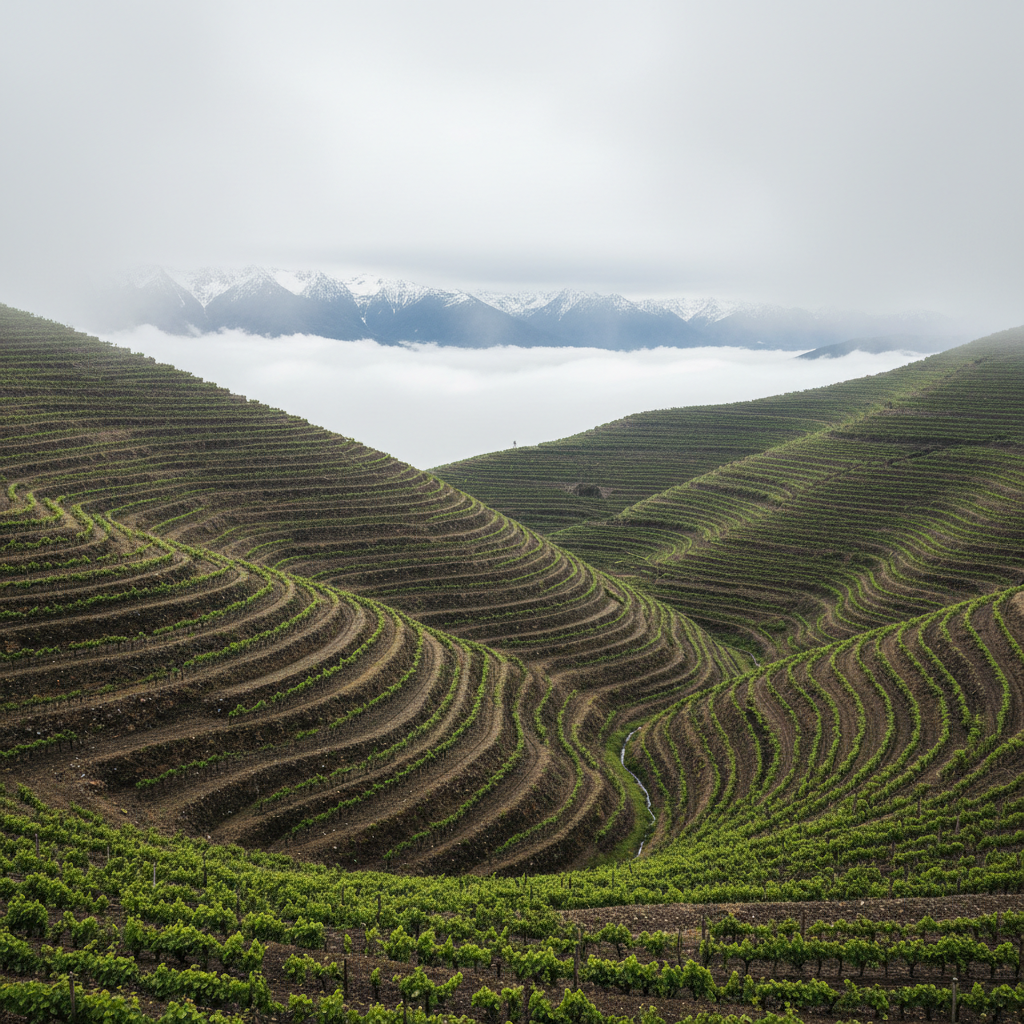
Elevation
1,240m
Diurnal shift
18°C
Soil mineral content by elevation
Question 01
"Why do vines at 1,200 metres taste different?"
At elevation, the temperature between day and night swings by as much as 18°C. Vines spend their days photosynthesising under intense ultraviolet light, then cool dramatically at dusk — slowing the conversion of malic acid to alcohol and locking in the kind of precision acidity that makes a wine teach you something with every sip.
The soils are different too. Decomposed granite and limestone fragments drain freely but hold trace minerals: iron, zinc, potassium in concentrations you simply don't find at lower altitudes. Roots reach three metres down to find water in summer. That stress is the point — it forces complexity.
18°C
Average diurnal temperature shift
3×
More UV exposure vs. 300m vineyards
72%
Higher mineral concentration in soil
40yr
Average vine age in heritage plots
Question 02
"What happens when a retaining wall collapses?"
Every terrace on a steep vineyard is held by hand-laid stone — walls built over generations, often without mortar, relying on gravity and fit alone. When one stone shifts, water finds the gap. Erosion is not gradual: it is sudden, and it is total.
A single winter storm can remove a terrace that took a family three seasons to build. The vines — some of them planted before your grandparents were born — go with it. What's lost is not just a row of fruit. It's the accumulated mineral memory of a specific piece of ground.
Erosion cascade — once a wall fails
Repair costs $4,200–$8,000 per 10m of terrace. Most small-holding vintners cannot absorb that cost in a single season. Without intervention, they abandon the slope.
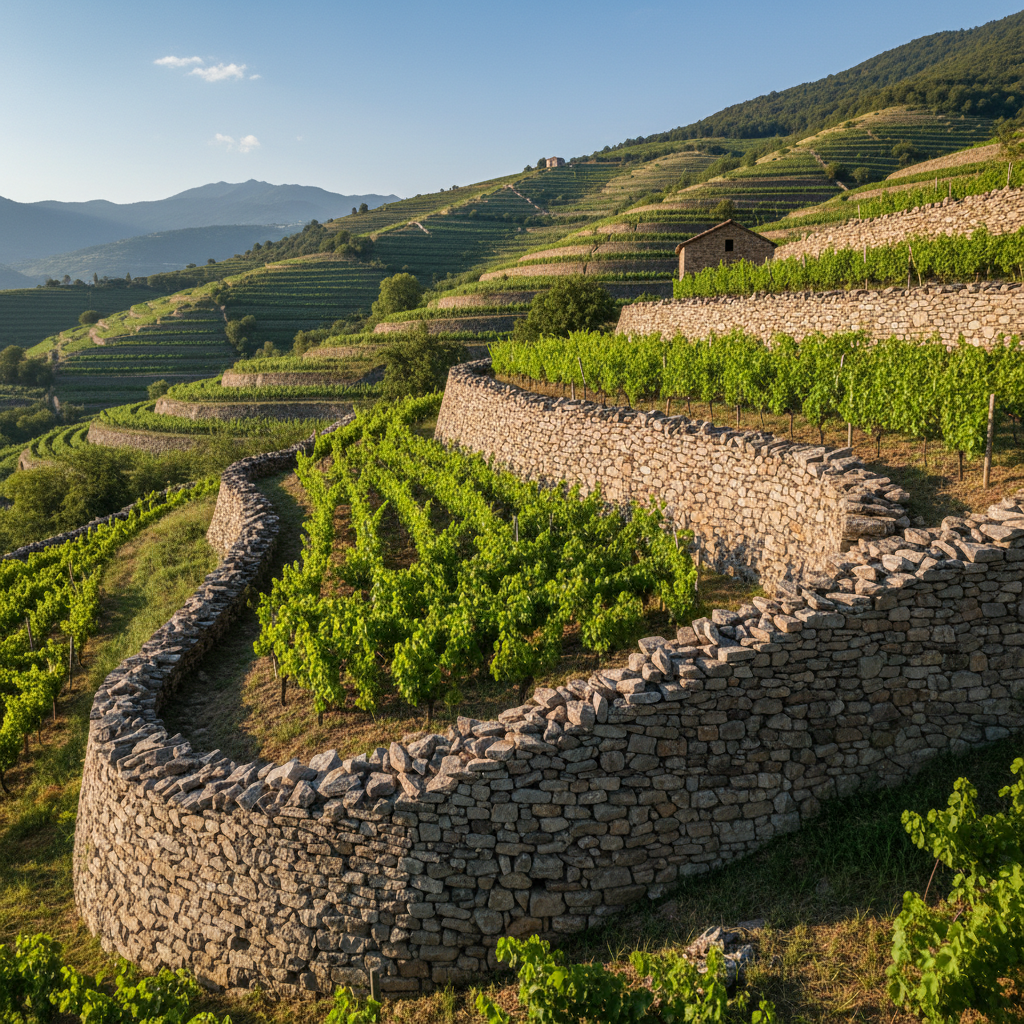
Priorat, Spain — 1880s terrace
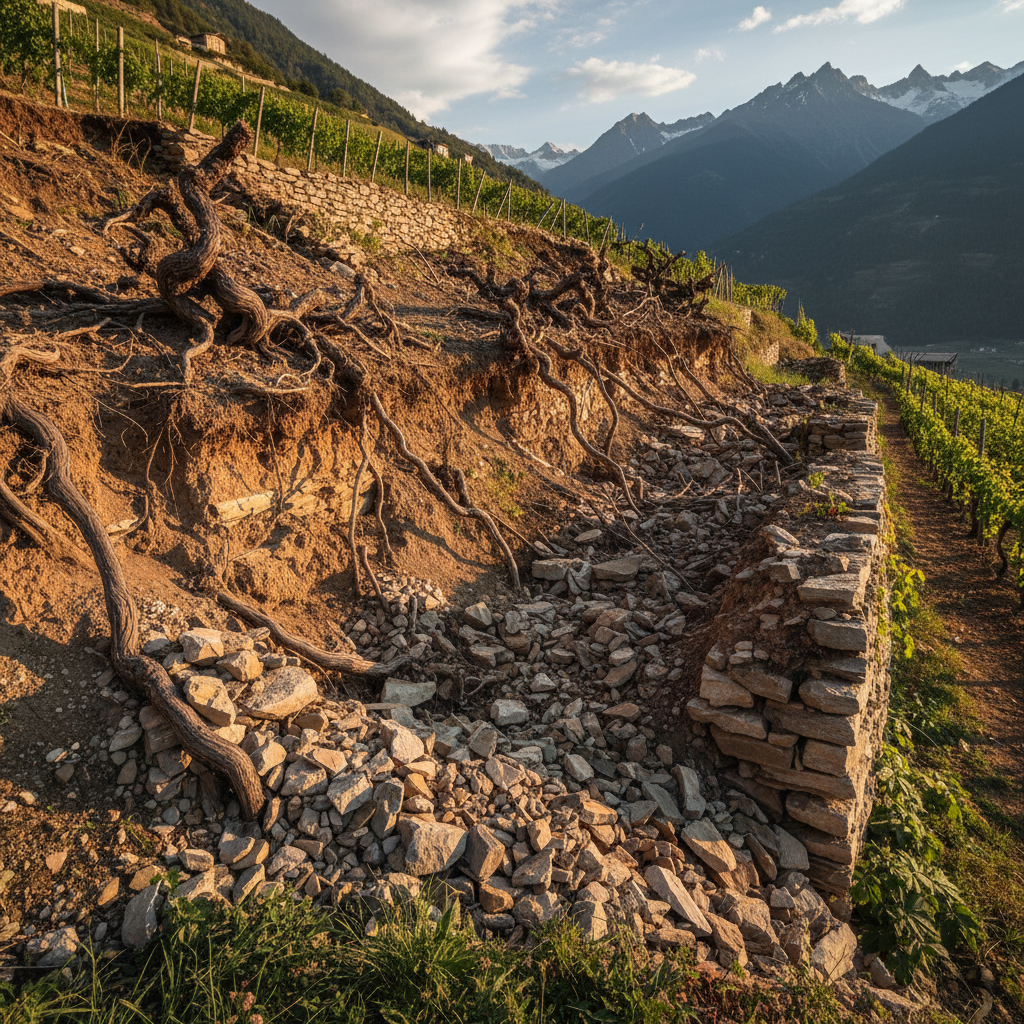
After — one season without repair
Irreversible
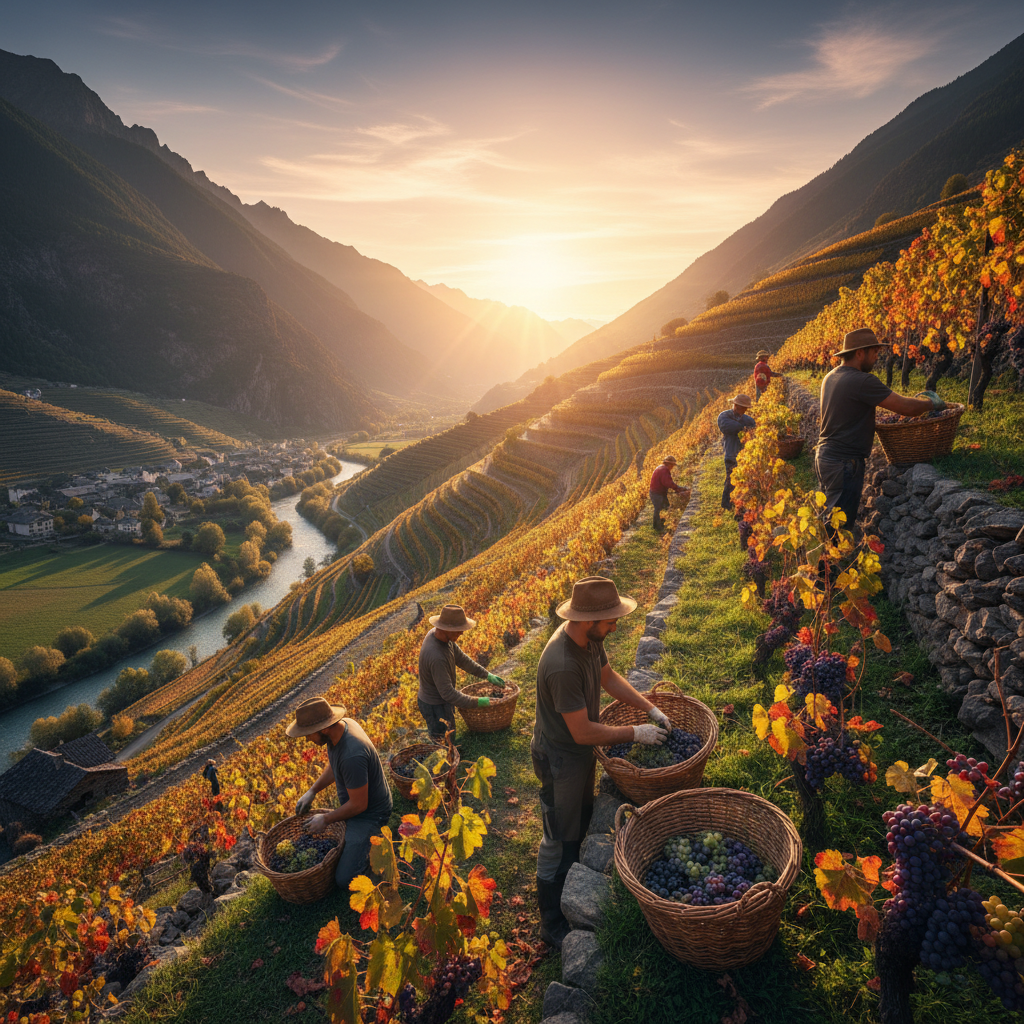
Harvest at altitude
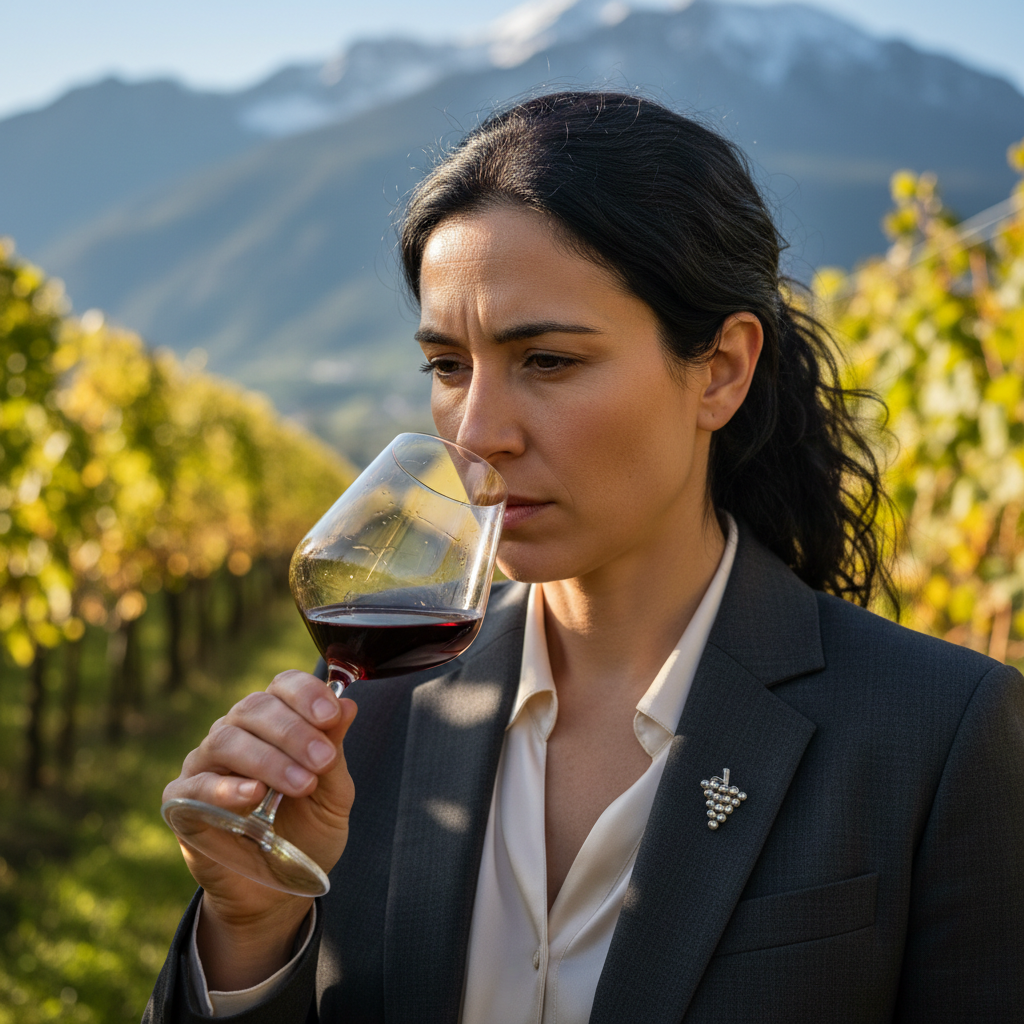
Rhône Valley
Documents flavour profiles from heritage plots annually.
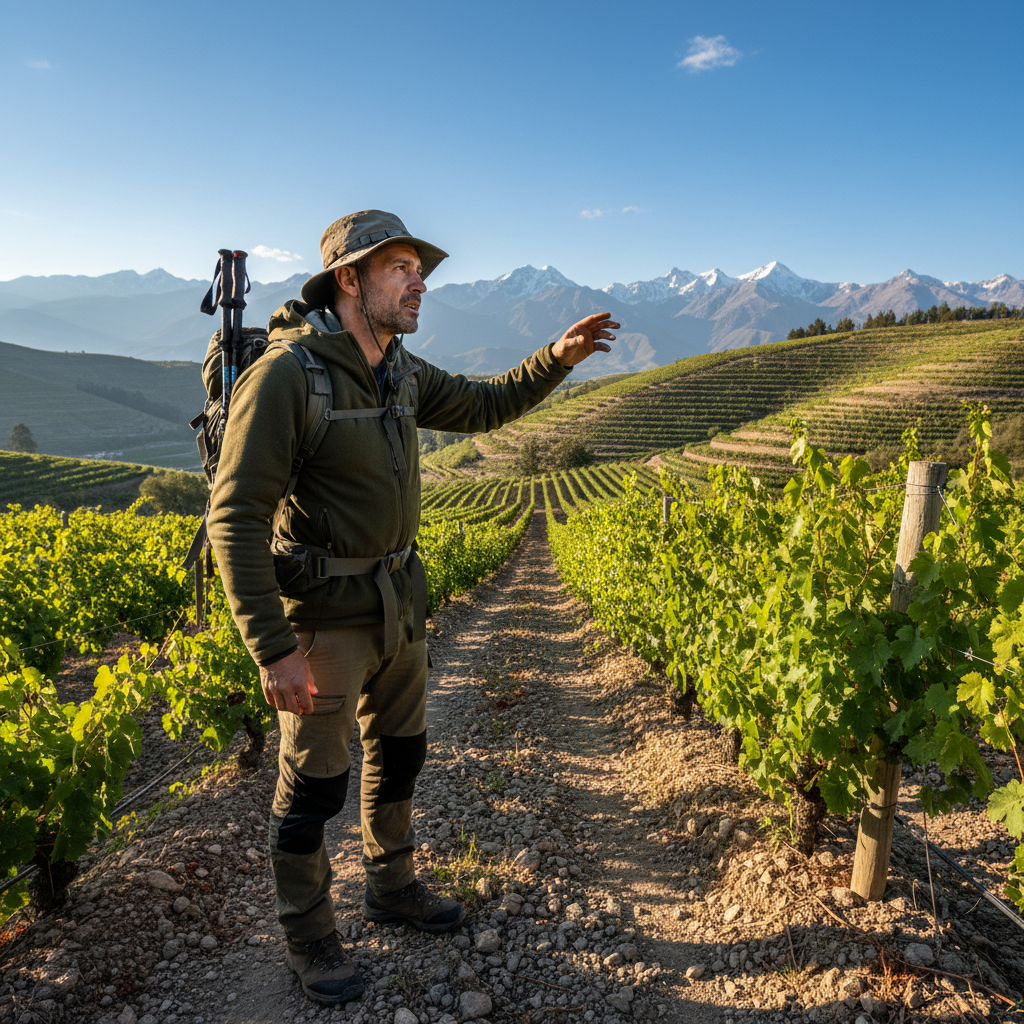
Mendoza, Argentina
Leads tasting hikes connecting visitors to the land they drink.
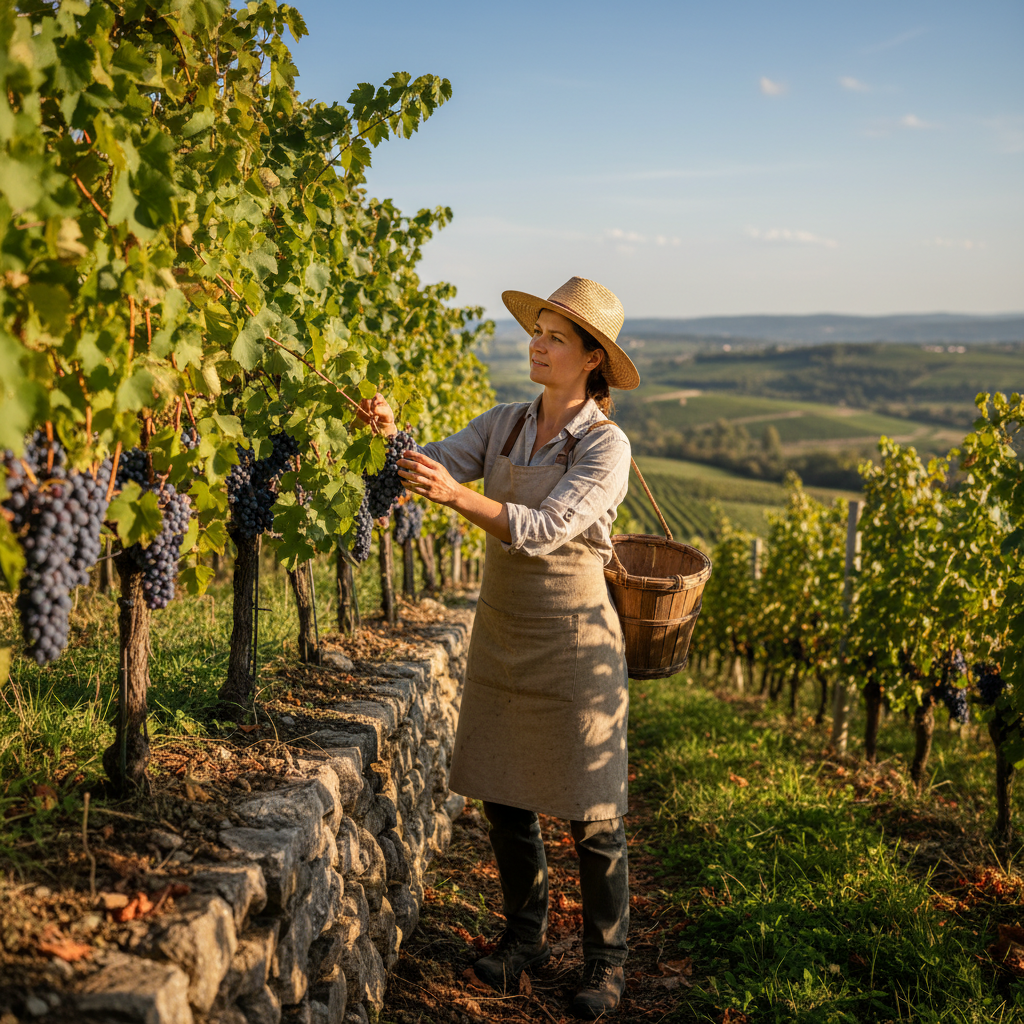
Wachau, Austria
Third-generation steward of 0.4ha of Riesling on loess terraces.
Question 03
"Who tends these slopes between harvests?"
The Terroir Collective is a working group: sommeliers who taste the difference that altitude makes and want to protect its source; vintners whose families have worked the same terraces for three generations; trail guides who have watched tourists fall in love with a view and then return home without knowing the view was under threat.
Between harvests — the eight months when no one is watching — these slopes need monitoring, wall repair, drainage maintenance, and soil testing. That work is quiet, unglamorous, and essential. It is what your contribution funds.
What off-season preservation looks like